
Share Clarence Wesley's obituary with others.
Invite friends and family to read the obituary and add memories.
Stay updated
We'll notify you when service details or new memories are added.
You're now following this obituary
We'll email you when there are updates.
Select your format and elements to print

IN LOVING MEMORY OF Clarence Wesley
Clarence
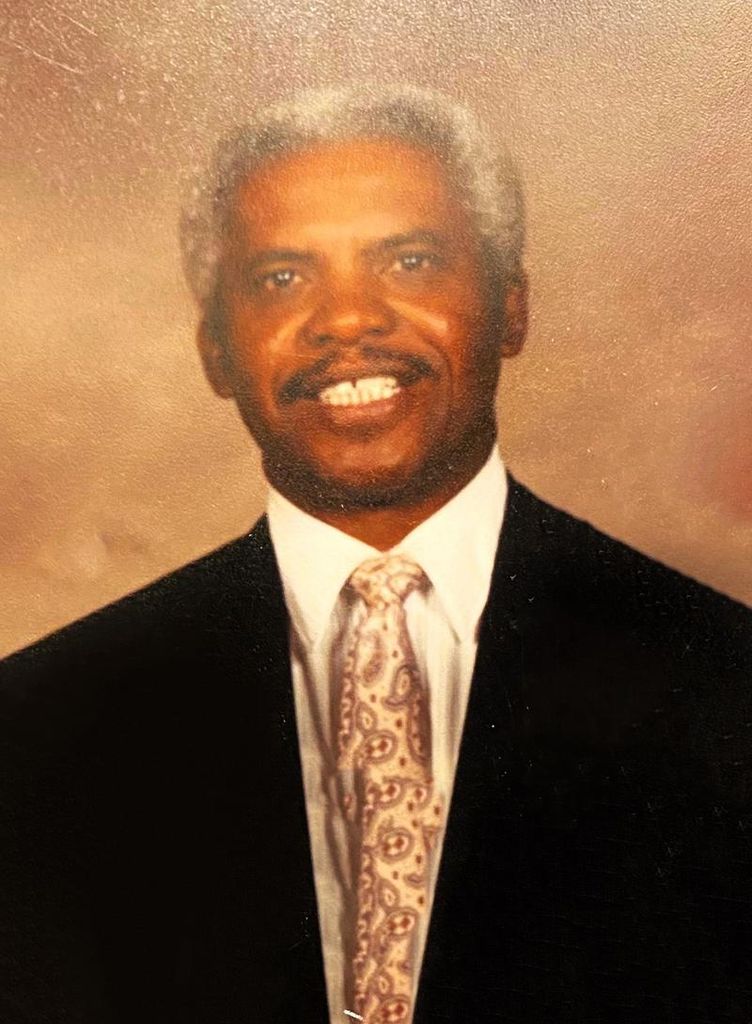
Wesley
Sep 25, 1940 — Jun 1, 2025
Clarence Wesley's Obituary
Clarence Wesley
A Legacy of Leadership, Love, and Lasting Impact
September 24, 1940, to June 1, 2025
Clarence Wesley, a Wichita leader and innovator, serving for more than 65 years, passed
peacefully, June 1, 2025, at the age of 84, leaving behind a legacy that cannot be measured by
titles or in words alone, but lives on in the countless lives he inspired, the institutions he shaped, and the family he loved with his whole heart. He was a man whose life was defined by
purpose, compassion, and a passionate unwavering commitment to lifting others.
Born the youngest of eight children in Sandy Ridge (Coffeyville), Kansas, on September 24,
1940, the date assured by his mother, or September 25, 1940, according to public record, to
Leonard H. Wesley, Sr., a father among the first Wesley generation born into full emancipation
with only the dream of his escape from his subordinate economic status, and his mother,
Delora (Pettie) Wesley, fueling that dream by faith and commitment. Clarence's early years
were marked by resilience. After the loss of his father at a young age, his mother kept things
moving forward, steadfastly refusing any type of government assistance, even when them
monthly household income was as low as $69.00. She kept the family tight in very practical
ways, while pushing her children to the seemingly impractical. From those humble beginnings,
Clarence cultivated a spirit of excellence, faith, and impassioned determination that would
guide him for the rest of his life.
Clarence's voice for justice began in his teenage years. At age 16, as president of the NAACP
Youth Council in Coffeyville, he led a protest against the distribution of inferior textbooks to
Black students. That bold act led to a meeting with Kansas Governor George Docking and a
policy reversal that would impact generations to come. It was one of the first of many
courageous stands he would take in service of equity and education.
Academic and athletic talent helped finance Clarence's undergraduate work, first earning his
Bachelor of Science from Pittsburg State University, where he was a proud member and chapter
president (Polemarch) of Kappa Alpha Psi Fraternity, Inc. He later received his Master of Arts
from Wichita State University. Throughout his academic journey, he was recognized for his
intellect, his idealistic approach, and his belief that education was not just a personal
achievement, but a tool for collective uplift.
His career began on the comet's tail of a significant cultural ferment in the country, the
"Melting pot" era, Black pride, and a period of ascendancy of free enterprise. Teaching was a
natural and inevitable first profession for Clarence, where he served as an elementary school
teacher in the Wichita Public School system (Fairmount Elementary, USD 259) from 1962 to
1970, following in the footsteps of his two pioneering older brothers, Leonard Jr. and Meldon,
who became giants in education. And during that era, when the school riots broke out, he was
engaged to mediate, which placed new eyes on his communication effectiveness and opened
paths to new positions including assistant principal, director of the junior high tutorial
programs, director of Upward Bound at Wichita State University and youth director of National
Alliance of Businessmen. Clarence's presence in the classroom left a profound impact on
generations of students. He later went on to teach at Wichita State University and continued to
educate and mentor well into 2017. He never stopped teaching—in every room, every meeting,
and every conversation, he offered wisdom, insight, and encouragement.
In 1970, Clarence took on the role of Vice President of Community Development for the Wichita
Chamber of Commerce, a position that opened doors for him to affect change on a larger scale.
He was the first Black American to serve in this position. He became a powerful force in the
realms of urban development, business advocacy, military affairs, and educational opportunity.
As Manager of Community Development, he also hosted the television program Looking In on
KWCH Channel 12, which provided a platform to address minority issues and community
concerns. Clarence's leadership reached the national stage when he was appointed to the U.S. Small
Business Administration's National Advisory Board, representing Region 7. Under Presidents
Gerald Ford and Jimmy Carter, he served as a member of the White House National Think Tank
on Minority Business Development. In 1978, he attended the White House Conference on
Balanced National Growth and Economic Development. President Carter later wrote to thank
him for his contributions—both oral and written—which helped shape the administration's
domestic policy agenda.
He was a consultant to the National Urban League and appointed to the Black Congressional
Caucus National Brainstorming Task Force. He was also a founding force behind Central Systems
Development Corporation, a federally designated MESBIC (Minority Enterprise Small Business
Investment Corporation), which financed over six million dollars in minority-owned businesses
in Wichita and beyond. Companies like JR Custom Metals, Little Pals Daycare, Marple Theater,
Alford Electric, The Smokehouse, of which he inadvertently acquired ownership control and
many more were given the opportunity to grow because of Clarence's belief in economic
empowerment and equal opportunity.
But Clarence's impact extended far beyond his professional life. He was a devoted husband,
marrying his beloved Peggy in 1965 after a serendipitous meeting on a neighborhood street in
Wichita. Together, they built a life grounded in service, family, and faith. Peggy, herself a
pioneer as the first Black banker in the city of Wichita, stood as both partner and pillar beside
Clarence for six decades. Their union brought forth two daughters, Keira (New York) and
Marquel (Georgia), and later, three grandchildren: Brauck, Tyler, and Cameron, each of whom
Clarence loved deeply and celebrated with pride.
He was also a mentor and father figure to many, especially through his involvement with the
Teenage Area Recreation Program (TARP) at McAdams Park. Even years later, the now-adult
participants of the program would honor Clarence for the loving discipline and guidance he
provided during their formative years. He had a unique ability to lead with both strength and
tenderness, always challenging others to rise while assuring them they were already enough.
As a celebrated athlete in his youth and later a basketball coach, Clarence often reminded his
players, students, and even his own children that "life is played from the eyebrows up." He
would say, "If you can't think it, you can't play it." For him, success was always rooted in the
mind and spirit before it ever reached the court or the classroom. That simple, powerful truth
became a guiding principle not only for those he mentored but for how he lived his own
life—with thoughtfulness, purpose, and strategy.
In later years, golf became his favorite sport—one that brought him peace, joy, and lifelong
friendships.
He leaves behind not only his immediate family but also his sister-in-law, Betty (Leonard) a host
of nieces: Cecilia, JoVonna, Toletha, Salondra and nephews: Steven, James, Phillip, Darrell,
Michael, Dennis, Derrick, Eric, Tracy, Leonard III, and Alan whom he loved immensely and
celebrated with pride. Family was everything to Clarence, and his presence at reunions, events
and family basket dinners will be deeply missed.
Clarence was preceded in death by all his siblings: Leonard, Jr., Curtis, Meldon, Elva Mae, Lola,
Rosetta, and Helen. Though he now joins them in eternity, his legacy continues here in the
family he cherished, the city he helped shape, and the lives he touched through his
commitment to justice, education, and community.
Throughout his life, Clarence received several awards and was recognized by local and national
leaders alike. He was recently inducted into the Wichita Black Educators Hall of Fame and
honored by the Wichita Branch NAACP with their Legacy Award. But to those who knew him
best, he was far more than a man of accolades. He was a man of purpose. A man of integrity. A
man, who lived his life in service to others, and who believed that the highest calling was to help
others realize their own power and potential.
Clarence Wesley was a builder of people. A champion for justice. A husband, father,
grandfather, teacher, mentor, and friend. And as we carry his memory forward, may we each
strive to reflect the values he lived by humility, service, wisdom, and unwavering love.
Funeral Services for Clarence Wesley
Visitation

Friday
Jackson Mortuary Chapel
10:00 am - 6:00 pm
Celebration of Life
Saturday
Central Community Church
Starts at 1:00 pm
Graveside Service
Monday
White Chapel Cemetery
Starts at 2:00 pm
Clarence Wesley's Guestbook
Visits: 33
This site is protected by reCAPTCHA and the
Google Privacy Policy and Terms of Service apply.
Service map data © OpenStreetMap contributors